
SmartRabbitz helps teams apply AI and machine learning where they create measurable product or operations value—classification, forecasting, recommendations, document understanding and workflow automation with human oversight.
Business problems solved
- Unclear use cases or pilots that never reach production
- Models that cannot be integrated into existing products
- Concerns about data quality, bias and operational risk
Solutions and deliverables
- Use-case discovery and feasibility assessment
- Model selection, training and evaluation workflows
- API and product integration for AI features
- Monitoring, retraining and governance practices
Who this service is for
Product and engineering teams adding intelligence to SaaS, enterprise or healthcare applications.
Technology and integration approach
We combine classical ML, modern LLM tooling and retrieval patterns based on your data, latency and cost constraints.
Security, governance and compliance
Data handling, access boundaries and human review steps are defined before features go live—especially for customer-facing or regulated domains.
Implementation process
- Identify high-value use cases
- Prototype and validate with real data samples
- Integrate into product workflows
- Measure, monitor and improve
Case evidence
Read our SaaS AI implementation playbook and explore Generative AI services.
Questions buyers ask
- Do you only build chatbots?
- No. We deliver a broad range of AI features including scoring, extraction, routing and decision support.
- Can you work with our existing cloud stack?
- Yes. We integrate with common cloud AI services and custom deployments.
Next step
Describe the workflow you want to improve and we will propose a practical AI path.
Artificial Intelligence
Artificial intelligence is a vast and diverse field, which refers to the use of multiple technologies to build machines and computers that have the ability to mimic cognitive capabilities associated with human intelligence, such as being able to perceive, respond to spoken or written language, organize, analyze and make sense of raw data, make recommendations, and much more. Although artificial intelligence is often thought of as a system in and of itself, it is a conglomeration of technologies implemented in a system to enable it to learn, reason, communicate and act to solve complex problems.

Machine Learning
Machine learning is a subset of AI that enables a machine or a system to automatically learn and improve from experience. Instead of explicitly programming, machine learning uses algorithms to analyze large amounts of data, learn from the insights gathered, and then make informed
decisions. They are self-learning and consequently self-improving systems that rely on deep learning techniques to analyze large sets of data. Integrating the AI engine with data analytics and visualization tools produces cognitive business solutions that deliver relevant insights. Machine learning algorithms improve their performance over time as they are trained, or in other words exposed to more data. Machine learning models are the output, or what the program learns from running an algorithm on training data. The more data used, the better the model will get. There are numerous machine learning algorithms that can be applied to identify patterns and contextualize information. We choose algorithms based on factors such as the nature of data to be analyzed and the type of questions to be answered.
Artificial neural networks which are multi-layered and are trained on large data sets enable machines to automatically identify patterns with high levels of accuracy.
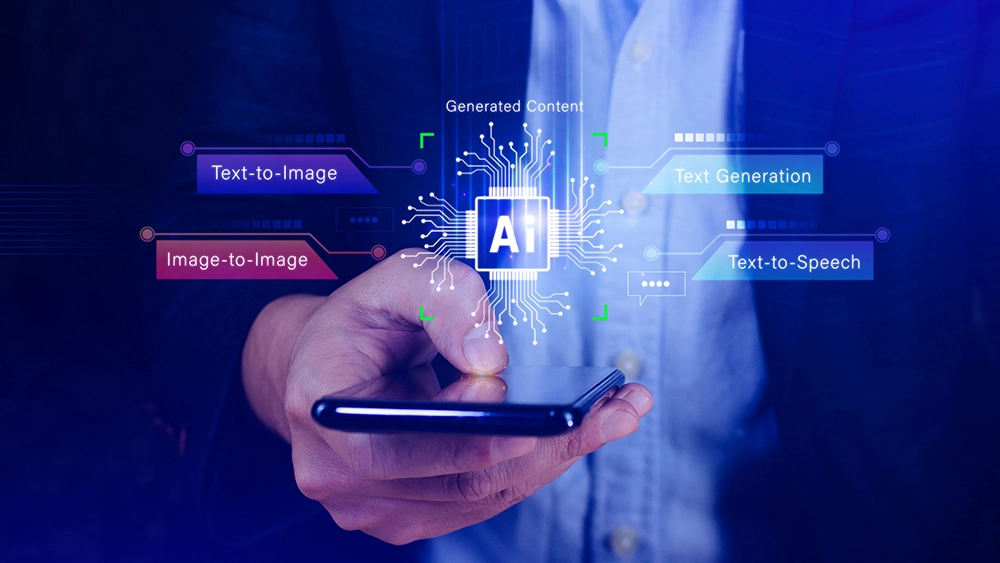
-
Artificial neural networks
which are multi-layered and are trained on large data sets enable machines to automatically identify patterns with high levels of accuracy.
-
Areas of contribution
From process automation to predictive analysis, there are numerous areas which AI can contribute to. To build cognitive computing applications that can increase sales, improve production efficiency, or enrich customer experience, connect with our data science team.
-
Generative AI
Our artificial intelligence solutions include generative AI, which has caught the imagination of the world with its capability to mimic human creativity. Generative AI systems powered by deep neural networks and sophisticated algorithms could produce text, music, art, and virtual worlds. With our expertise in AI and deep knowledge of generative algorithms, we empower businesses to leverage the full potential of this technology which is disruptive and at the same transformative.
Our data engineers have experience with multiple machine learning platforms and tools. With our expertise in machine learning, we design and build self-renewing systems for various business sectors integrating technologies such as NLP, Data Science, Big Data Analytics, and Internet of Things (IoT). The areas include:
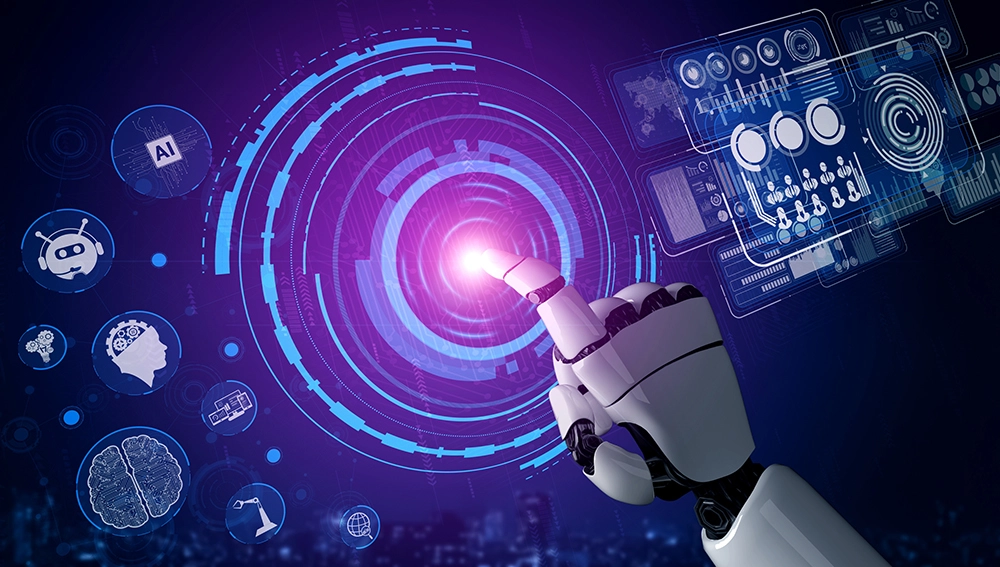
Connected Intelligence
Connect distributed devices, other assets and even people to a single platform. Study large sets of data that gets collected to identify patterns or similarities. Optimize operations and predict events by means of Statistical analysis of historical and time-series data & Machine learning
Speech to Text
Adopt speech recognition technology to improve productivity and user experience. Medical Speech Recognition is an area where this could be used by health care professionals to type notes into their devices without interrupting the quality of care. Medical Transcription is another area in health care where this is highly applicable.

Text to Speech
The accessibility of your products and apps can be increased with text-to-speech service. By integrating these services with your systems to build cognitive speech solutions and offer a better customer experience that accommodate even the visually challenged.
Computer Vision
This technology can be used to solve problems ranging from asset monitoring in hazardous environments to sports performance assessment. This is built by leveraging AI to build highly advanced image recognition systems.