


Unlocking the Potential of Agentic AI in SaaS: A CTO’s Comprehensive Guide
As the digital landscape evolves, agentic AI in SaaS is emerging as a transformative force for software companies aiming to deliver smarter, autonomous solutions. For CTOs navigating the complexities of modern software development, understanding agentic AI’s role is crucial to driving innovation and competitive advantage.
What Is Agentic AI in SaaS?
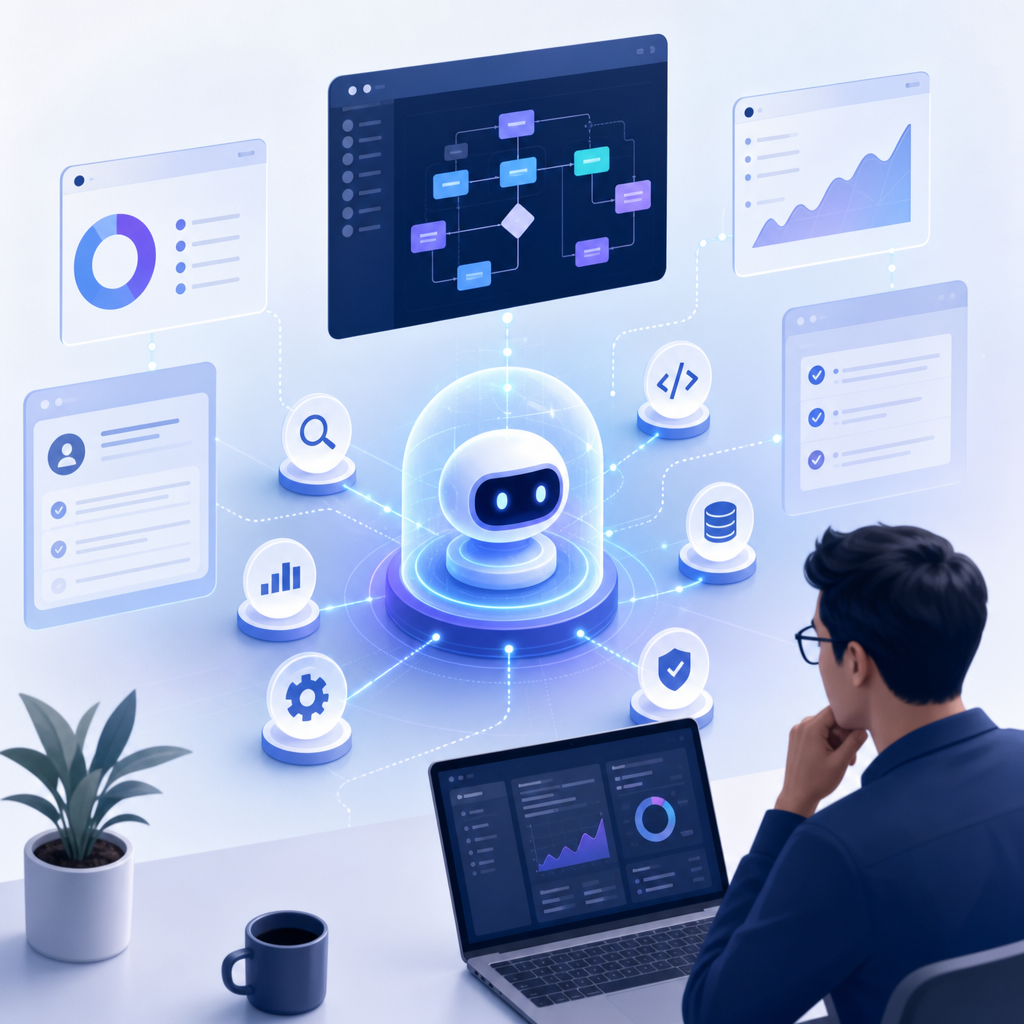
Agentic AI refers to artificial intelligence systems capable of autonomous decision-making and goal-oriented actions without constant human intervention. When integrated into Software-as-a-Service (SaaS) platforms, these AI agents can perform complex tasks, adapt to changing environments, and optimize workflows dynamically.
Unlike traditional AI that relies on predefined rules or human prompts, agentic AI operates with a degree of agency, enabling SaaS products to become more intelligent, responsive, and scalable.
At its core, agentic AI embodies the principles of autonomy, proactivity, and adaptability, allowing software to not only respond to user inputs but also anticipate needs and take independent actions that align with business objectives.
Why CTOs Should Prioritize Agentic AI in SaaS
CTOs are tasked with steering technology strategy to meet evolving business needs. Incorporating agentic AI in SaaS offers several compelling benefits:
- Enhanced Automation: Agentic AI can automate end-to-end processes, reducing manual oversight and accelerating delivery.
- Improved User Experience: Autonomous agents personalize interactions and proactively resolve issues.
- Scalability: AI-driven SaaS adapts seamlessly to growing user bases and data volumes.
- Competitive Differentiation: Early adoption positions companies as innovation leaders.
- Cost Efficiency: By optimizing resource allocation and reducing human intervention, agentic AI lowers operational costs.
- Continuous Learning: Agentic AI systems improve over time through feedback loops, enhancing accuracy and effectiveness.
Practical Framework for Implementing Agentic AI in SaaS
Successfully integrating agentic AI requires a structured approach. Below is a practical framework tailored for CTOs:
1. Define Clear Objectives
Identify specific business goals agentic AI will address, such as automating customer support, optimizing resource allocation, or enhancing predictive analytics. Clear objectives help focus development efforts and measure success.
2. Assess Data Readiness
Agentic AI thrives on quality data. Evaluate your SaaS platform’s data infrastructure, ensuring access to clean, relevant, and real-time datasets. Implement data governance policies to maintain data integrity and compliance.
3. Choose the Right AI Models
Select AI architectures capable of autonomous decision-making, such as reinforcement learning, advanced generative AI models, or multi-agent systems tailored for SaaS environments. Consider model explainability and scalability.
4. Integrate Seamlessly with Existing Systems
Plan for smooth integration with legacy systems and APIs to maintain operational continuity. Use modular design principles to enable flexible deployment and updates.
5. Implement Monitoring and Feedback Loops
Establish mechanisms to track AI agent performance, user interactions, and outcomes for continuous improvement. Incorporate real-time analytics and alerting to detect anomalies and optimize behavior.
6. Prioritize Security and Compliance
Agentic AI systems must adhere to security best practices and regulatory requirements. Implement robust authentication, encryption, and audit trails to safeguard data and AI decisions.
7. Foster Cross-Functional Collaboration
Engage stakeholders from engineering, data science, product management, and legal teams to ensure alignment and address multidisciplinary challenges.

Real-World Examples of Agentic AI in SaaS
Several SaaS providers have begun leveraging agentic AI to revolutionize their offerings:
- Intelligent Customer Support: Autonomous AI agents that handle tier-1 support tickets, escalating complex issues only when necessary, improving response times and reducing costs.
- Dynamic Resource Management: AI-driven orchestration of cloud resources based on real-time demand, optimizing costs and performance while ensuring high availability.
- Personalized Marketing Automation: Agentic AI that designs, tests, and deploys marketing campaigns autonomously, adapting strategies based on engagement data to maximize ROI.
- Automated Compliance Monitoring: AI agents continuously scan SaaS environments for policy violations or security risks, alerting teams proactively.
- Smart Workflow Orchestration: Autonomous agents coordinate multi-step business processes, dynamically adjusting based on changing conditions and priorities.
- Autonomous SaaS DevOps: Agentic AI systems managing continuous integration and continuous delivery (CI/CD) pipelines, automating testing, deployment, and rollback processes to accelerate release cycles.
- Proactive Incident Management: AI agents that detect anomalies in SaaS platform performance, automatically triggering remediation workflows before users are impacted.
These examples illustrate how agentic AI in SaaS can deliver tangible business value by reducing operational overhead and enhancing user satisfaction.
Common Pitfalls to Avoid When Deploying Agentic AI in SaaS
Despite its promise, agentic AI integration can present challenges:
- Overestimating AI Capabilities: Expecting full autonomy too soon can lead to failures. Start with limited scopes and expand gradually.
- Ignoring Data Quality: Poor data leads to unreliable AI decisions. Invest in data governance upfront.
- Lack of Transparency: Autonomous agents must have explainable decision pathways to maintain trust with users and stakeholders.
- Security Risks: Autonomous systems may introduce vulnerabilities if not properly secured, including data breaches and malicious exploitation.
- Resistance to Change: Teams may be hesitant to adopt autonomous AI due to fear of job displacement or lack of understanding; invest in training and communication.
- Neglecting Ethical Considerations: Ensure AI actions align with ethical standards and do not inadvertently cause harm or bias.
- Insufficient Human Oversight: Failing to establish clear governance and intervention protocols can lead to unchecked AI errors or unintended consequences.
- Underestimating Integration Complexity: Overlooking challenges in integrating agentic AI with existing SaaS architectures can cause delays and increased costs.
Implementation Checklist for CTOs
- Conduct a readiness assessment of your SaaS platform, including technical infrastructure and data maturity.
- Engage cross-functional teams including data scientists, developers, business stakeholders, and compliance experts.
- Develop a phased AI adoption roadmap with clear milestones and KPIs.
- Ensure compliance with data privacy laws such as GDPR, CCPA, and industry-specific regulations.
- Invest in training and change management for your teams to foster adoption and skill development.
- Set up continuous monitoring, logging, and iterative improvement processes for AI agents.
- Establish protocols for human oversight and intervention when necessary.
- Plan for scalability and future upgrades as AI technologies evolve.
- Implement robust security measures including encryption, access controls, and regular audits.
- Document AI decision-making processes to support explainability and regulatory compliance.
How SmartRabbitz Innovations Can Help
At SmartRabbitz Innovations, we specialize in delivering cutting-edge solutions that harness the power of agentic AI in SaaS. Our expertise spans AI, GenAI, SaaS modernization, and automation, enabling CTOs to accelerate innovation while mitigating risks.
Whether you’re looking to pilot agentic AI capabilities or fully integrate autonomous agents into your SaaS offerings, our team provides tailored strategies and development services to meet your unique needs.
Ready to elevate your SaaS with agentic AI? Contact us today for a comprehensive SaaS AI review and roadmap consultation.
Future Trends in Agentic AI for SaaS
The trajectory of agentic AI in SaaS points toward increasingly sophisticated autonomous systems capable of self-optimization and collaboration across platforms. Emerging technologies and trends include:
- Edge AI Integration: Deploying agentic AI closer to data sources for reduced latency and enhanced privacy.
- Explainable AI (XAI): Improving transparency of AI decisions to build trust and meet regulatory requirements.
- Multi-Agent Systems: Collaboration between multiple autonomous agents to solve complex problems and orchestrate workflows.
- AI-Driven DevOps: Autonomous agents managing software development pipelines, testing, and deployment for faster innovation cycles.
- Human-AI Collaboration: Enhanced interfaces that enable seamless interaction between humans and autonomous agents, combining strengths of both.
- Ethical and Responsible AI: Increasing focus on fairness, accountability, and sustainability in agentic AI deployments.
- Adaptive AI Architectures: Systems that dynamically reconfigure their models and strategies based on evolving business contexts and user feedback.
- Integration with IoT and Real-Time Data Streams: Enabling agentic AI to act autonomously on live data from connected devices and sensors.
CTOs who stay ahead of these trends will unlock new business models, operational efficiencies, and customer experiences.
Additional FAQ
How do agentic AI systems learn and improve over time?
Agentic AI systems often employ reinforcement learning and continuous feedback loops, allowing them to adapt based on new data and outcomes. This ongoing learning enables them to refine decision-making and optimize performance autonomously.
What industries benefit most from agentic AI in SaaS?
While agentic AI has broad applicability, industries such as finance, healthcare, marketing, customer service, and cloud infrastructure management see significant benefits due to their complex workflows and high data volumes.
How can CTOs measure the ROI of agentic AI initiatives?
ROI can be measured through metrics like reduced operational costs, improved customer satisfaction scores, faster time-to-market, increased automation rates, and revenue growth attributable to enhanced SaaS capabilities.
What role does human oversight play in agentic AI?
Human oversight remains critical to ensure AI actions align with business goals, ethical standards, and regulatory compliance. CTOs should implement governance frameworks that allow intervention when necessary.
Can agentic AI be integrated with existing SaaS platforms without major overhauls?
Yes, with modular AI components and API-based integration, many SaaS platforms can incorporate agentic AI incrementally, minimizing disruption while maximizing benefits.
How do agentic AI agents handle ethical dilemmas or conflicting objectives?
Advanced agentic AI systems incorporate ethical guidelines and constraint frameworks during design and training phases. They can prioritize objectives based on predefined business rules and ethical considerations, and escalate complex dilemmas to human overseers when necessary.
What infrastructure considerations are important for deploying agentic AI in SaaS?
Robust cloud infrastructure with scalable compute resources, low-latency networking, secure data storage, and real-time monitoring capabilities are essential. Additionally, support for containerization and microservices architectures facilitates flexible deployment of agentic AI components.
How can agentic AI improve SaaS product innovation?
By autonomously analyzing user behavior, market trends, and operational data, agentic AI can identify opportunities for new features, optimize existing functionalities, and accelerate experimentation cycles, enabling faster innovation.
What is the difference between agentic AI and traditional automation in SaaS?
Traditional automation typically follows fixed scripts or workflows triggered by specific events, requiring human setup and intervention. Agentic AI, however, can make independent decisions, learn from experience, and adapt its actions dynamically without explicit human direction.
How do privacy regulations impact the use of agentic AI in SaaS?
Privacy regulations like GDPR and CCPA require careful handling of personal data, transparency in AI decision-making, and user consent management. Agentic AI implementations must incorporate privacy-by-design principles and maintain audit trails to ensure compliance.
Conclusion
Agentic AI in SaaS represents a paradigm shift in software development and delivery. By empowering SaaS platforms with autonomous intelligence, CTOs can drive innovation, improve scalability, and create differentiated value for their organizations.
Implementing agentic AI requires careful planning, data readiness, and ongoing governance, but the rewards are substantial. Partnering with experts like SmartRabbitz Innovations ensures your SaaS journey into agentic AI is strategic and successful.
Take the first step towards smarter SaaS today — request your SaaS AI review from SmartRabbitz Innovations.