Healthcare AI innovations transforming clinic operations and patient care
Healthcare AI innovations are moving from theory to everyday use in clinics that need to improve efficiency and patient results. Walk into any modern clinic and you’ll likely see AI-driven scheduling, automated triage, or smart reminders in action. In this post, you’ll learn how healthcare AI innovations work in real clinics, what common challenges crop up, and how SmartRabbitz Innovations and HealthMesh help teams adopt AI that actually delivers value.
defining healthcare AI innovations
In the clinic setting, healthcare AI innovations are practical applications of artificial intelligence, from learning algorithms to robotics, that give physicians and staff tools to work faster and more accurately. You’ll see these tools in areas like diagnosis, scheduling, workflow automation, and even patient communication. The focus isn’t technology for its own sake but solving real, everyday problems.
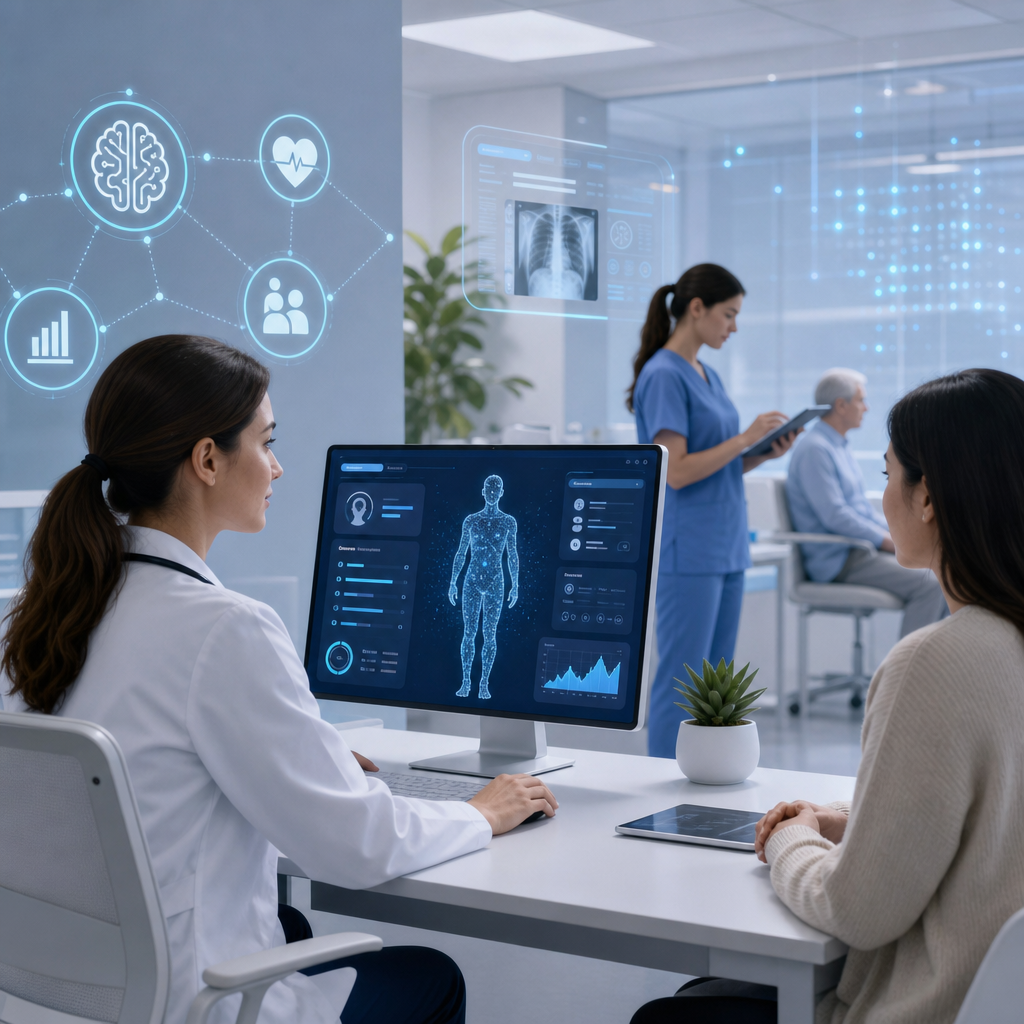
Let’s get specific. Imagine a busy urgent care practice using an AI-powered triage tool. Patients check in via tablet, and the system reviews symptoms in real time, flagging any high-risk cases for immediate attention. The front desk staff spend less time shuffling paperwork and more time helping people who really need it. We see similar setups with radiology, AI reviewing X-rays to spot subtle fractures or tumors, freeing up the radiologist’s time for complex cases. Natural language processing surfaces important details from handwritten notes, cutting the hours spent on manual data entry. All of these are examples of healthcare AI innovations quietly boosting productivity and quality of care.
how AI improves diagnosis and treatment at the point of care
One major advance in healthcare AI innovations is diagnostic support. AI can analyze thousands of medical images, lab results, or symptom profiles in seconds, surfacing insights a human might miss. For example, an ophthalmology clinic uses AI to rapidly review retinal scans, flagging early signs of diabetic retinopathy so that clinicians can intervene sooner.
AI goes beyond spotting disease. It can guide personalized treatments by looking at everything from genetic markers to medication history. Picture an oncology team using predictive models to match chemotherapy combinations to each patient’s tumor profile. The result? More precise care, fewer adverse events, and staff who spend less time guessing and more time acting on data. I’ve seen teams get frustrated when they launch AI without first cleaning their data, though. That’s a common pitfall, one worth highlighting before you consider rolling out new tools.
automation and operational efficiency in clinics
Automation driven by healthcare AI innovations is the quiet workhorse of many clinics. Let’s say you run a practice with high patient turnover. Instead of staff manually confirming every appointment, an AI-powered system handles scheduling, reminders, and even intake forms. Patients get follow-up messages tailored to their needs, reducing no-shows and cancellations.
On the billing side, AI validates insurance details during registration, flags errors, and submits clean claims. Clinics using these systems often see fewer denials and faster reimbursement cycles. We often hear from administrators who initially resisted automated workflows, only to admit later that they can’t imagine going back to paper logs and manual spreadsheets. AI-driven inventory systems can predict when you’ll need to restock popular medications, helping you avoid surprise shortages or costly overstock. The payoff is clear: staff refocus on patient care, not paperwork.
AI’s role in patient engagement and experience
Healthcare isn’t just about diagnoses, it’s about people managing their health day to day. Healthcare AI innovations can personalize patient outreach, from texted medication reminders to interactive health tips based on a person’s lab results. Virtual assistants answer questions at all hours, so patients don’t have to wait for a callback.
Consider a family medicine clinic using an AI chatbot to guide patients through pre-visit questionnaires. The system tailors questions based on their history, so the nurse walks in with a clear sense of risk factors and concerns. After the visit, AI analyzes feedback and flags trends, letting clinics adjust services based on what patients actually say. In my experience, clinics that use AI for engagement see more consistent follow-through on preventive care and get valuable insights into what’s working, or not.
healthcare AI innovations for data management and security
Managing and protecting sensitive patient data is a challenge for every clinic. Modern healthcare AI innovations include analytics platforms that sift through years of clinical records to spot trends, identify at-risk populations, or even surface billing errors. These systems help clinics turn piles of records into actionable steps for better care.
Security is another place where AI proves its worth. AI-based monitoring tools watch for strange access patterns or possible breaches and alert admins before data gets out. For example, if someone tries to download large batches of health records at odd hours, the system can flag and lock the account automatically. Some clinics use AI to anonymize data for research, balancing privacy with progress. Staying compliant with HIPAA and other regulations is easier when AI tools audit access and enforce security policies in real time. Want the official guidelines? HIPAA compliance guidelines.
optimizing clinic staffing with AI
Staffing is rarely simple. Clinics juggle fluctuating patient loads and complex schedules, and mistakes can mean either burned-out staff or long wait times. Healthcare AI innovations help forecast demand and build rosters that match real-world needs.
Let’s say your clinic’s Mondays are always slammed, but Fridays are quiet. AI models learn these patterns and suggest staffing adjustments week by week. Simulation-based training platforms use AI to deliver personalized content, so a new nurse gets extra time on triage protocols, while a seasoned provider skips ahead. We see clinics that use AI for workflow analysis uncover hidden bottlenecks, then tweak processes for smoother patient flow and higher staff morale. When teams trust the scheduling data, everyone benefits.
HealthMesh in action: real clinic results
SmartRabbitz Innovations built HealthMesh to bridge fragmented AI tools into a single platform that clinics can actually use. Rather than juggling a dozen logins, staff access scheduling, diagnostics, and patient communication tools from one dashboard.
For example, a suburban pediatric group saw no-shows drop sharply after rolling out HealthMesh’s automated reminders. Another clinic used HealthMesh to push diagnostic results and care plans directly into patient portals, speeding up follow-up care. By integrating everything, HealthMesh lowers the burden on staff and helps clinics realize the promise of healthcare AI innovations faster. If you’re curious what this could look like for your team, request a HealthMesh demo or contact us. We see clinics get the most out of HealthMesh when they start small and scale up once staff are comfortable.
getting past hurdles: adopting healthcare AI innovations
Change never comes without a few bumps. Clinics often worry about data integration headaches, staff resistance, or shaky privacy controls when they consider new AI tools. These are valid concerns, and ignoring them is risky.
I’ve seen the best results when clinics tackle adoption in phases. Start with one workflow, like automated reminders, and let staff test and tweak before full rollout. Partnering with experienced providers (like us) helps you avoid the common traps. Continuous training is key, especially for frontline staff who’ll use the tools every day. When teams feel heard and supported, adoption goes far smoother.
future directions for healthcare AI innovations in clinics
The next wave of healthcare AI innovations will push even deeper into clinical workflows. Generative AI (GenAI) is starting to draft visit notes, suggest diagnostic pathways, and surface decision support via simple chat interfaces. Robotics software is being tested for everything from automating supply runs inside hospitals to assisting with minimally invasive procedures.
I see clinics experimenting with drone delivery for urgent medications in remote areas, what seemed like science fiction five years ago is now being piloted in rural networks. Teams willing to test these new tools will likely set the pace for patient access and operational efficiency in the coming years. The real question: how quickly will your clinic be ready to adapt?
how clinics can begin with healthcare AI innovations
If you’re thinking about bringing healthcare AI innovations into your clinic, start by pinpointing where staff spend the most time on repetitive or manual work. Maybe it’s scheduling, maybe it’s data entry. Running a short pilot, such as testing automated appointment reminders for one provider, can show quick wins and build momentum for bigger changes.
Work closely with your technology partners to pick solutions that fit your clinic’s size and workflow. Early involvement from clinicians is critical, they’ll spot issues in real-world workflows that IT might miss. Make communication about the purpose and limits of AI a priority, so staff see these tools as a way to support, not replace, their work. We always recommend phased rollouts with structured feedback; it lets clinics adapt and scale at their own pace.
weighing costs and ROI of healthcare AI innovations
Investing in healthcare AI innovations means upfront costs for systems, training, and sometimes hardware. But clinics often recoup these costs by shaving hours off admin work, shortening billing cycles, and reducing errors. For instance, automating insurance claims can dramatically cut overhead, while AI-supported triage leads to more accurate diagnoses and fewer unnecessary tests.
Before jumping in, run a cost-benefit check, not just the direct savings but also softer returns like staff satisfaction and patient loyalty. Subscription-based tools like HealthMesh let clinics scale features and costs as they grow. Some practices may even qualify for grants supporting digital health upgrades. The bottom line: approach spending as an investment in both patient care and staff effectiveness.
pitfalls to avoid in healthcare AI adoption
Plenty of clinics have stumbled on the road to AI. The biggest misstep? Deploying expensive platforms with messy, incomplete data, garbage in, garbage out. Skimping on staff training is another. If people don’t understand the new AI tool or don’t trust it, adoption stalls and old habits creep back.
Another common error: forgetting to align AI projects with practical clinic needs. Don’t buy a flashy system that adds steps to your team’s day or spits out confusing reports. Prioritize clear data policies, invest in hands-on training, and invite staff to help refine the system. Ongoing monitoring and iterative tweaks make the difference between a tool that fades away and one that delivers ongoing value.
real-world stories: healthcare AI innovations at work
Across the globe, clinics large and small are getting results from healthcare AI innovations. A primary care team in a rural area rolled out an AI triage chatbot to sort patient requests before appointments. It quickly flagged urgent cases for same-day care, reducing wait times. Another clinic used predictive analytics to spot patients at risk for readmission, enabling earlier interventions that cut readmission rates.
Telemedicine is another area where AI shines. One group practice used AI-powered video consults to connect patients with specialists hundreds of miles away, bridging the gap where local expertise was in short supply. These examples show that healthcare AI innovations aren’t just for academic hospitals or urban centers; they work in real-world clinics now.